
Last updated November 23, 2026
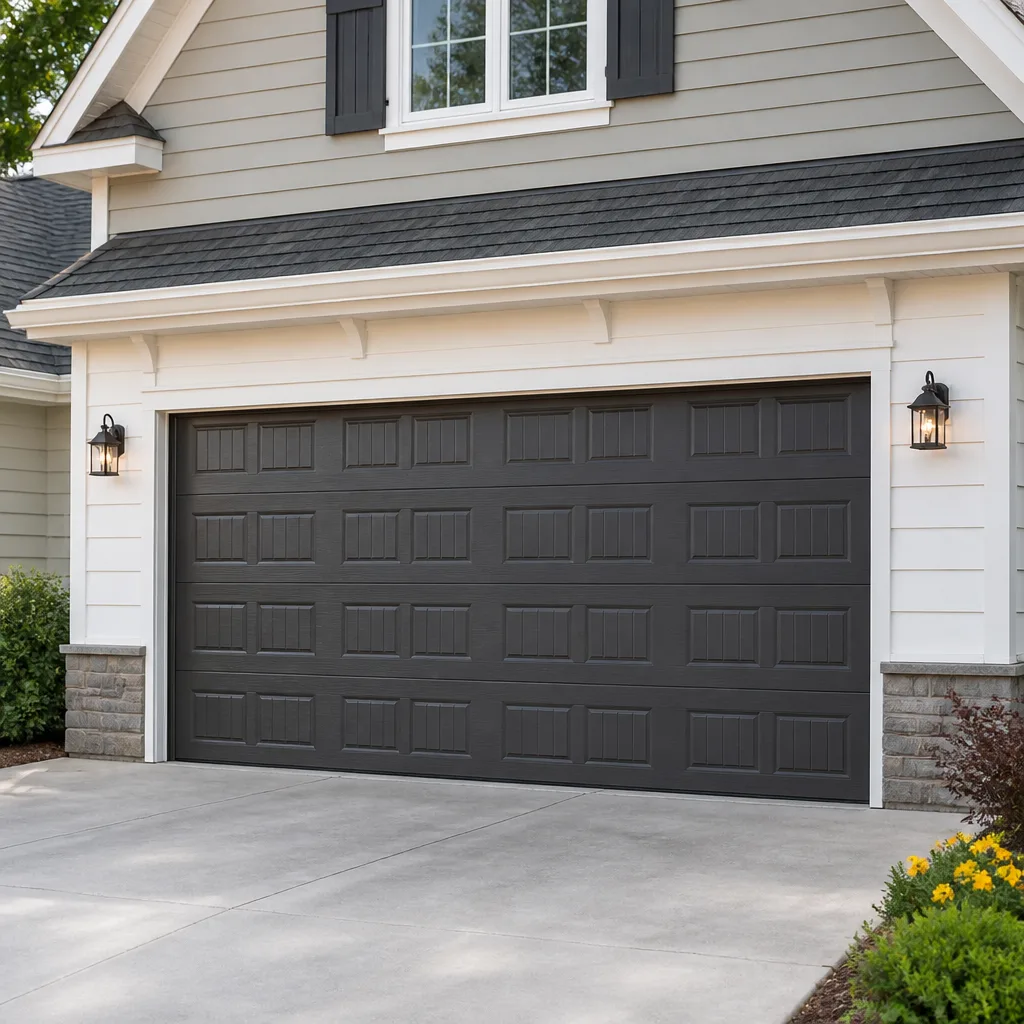 Raised-panel steel
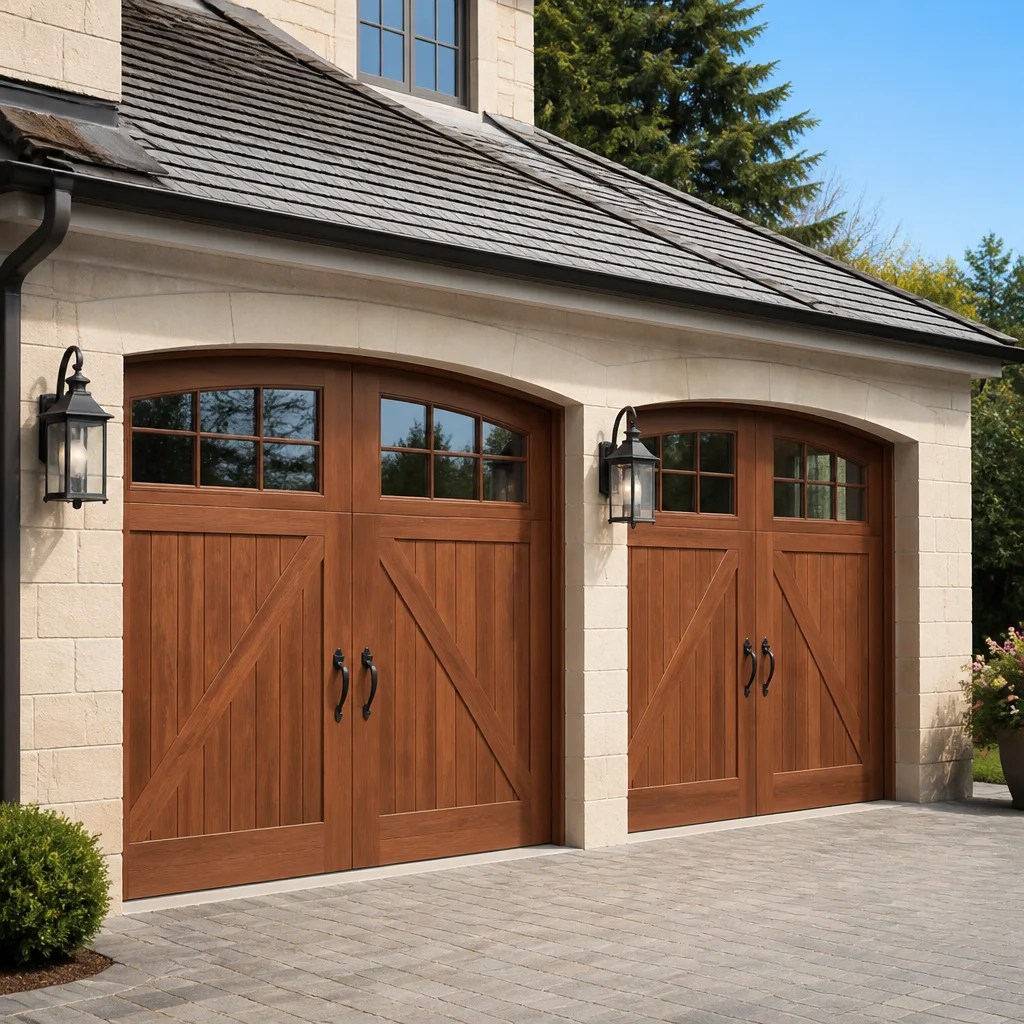 Carriage house
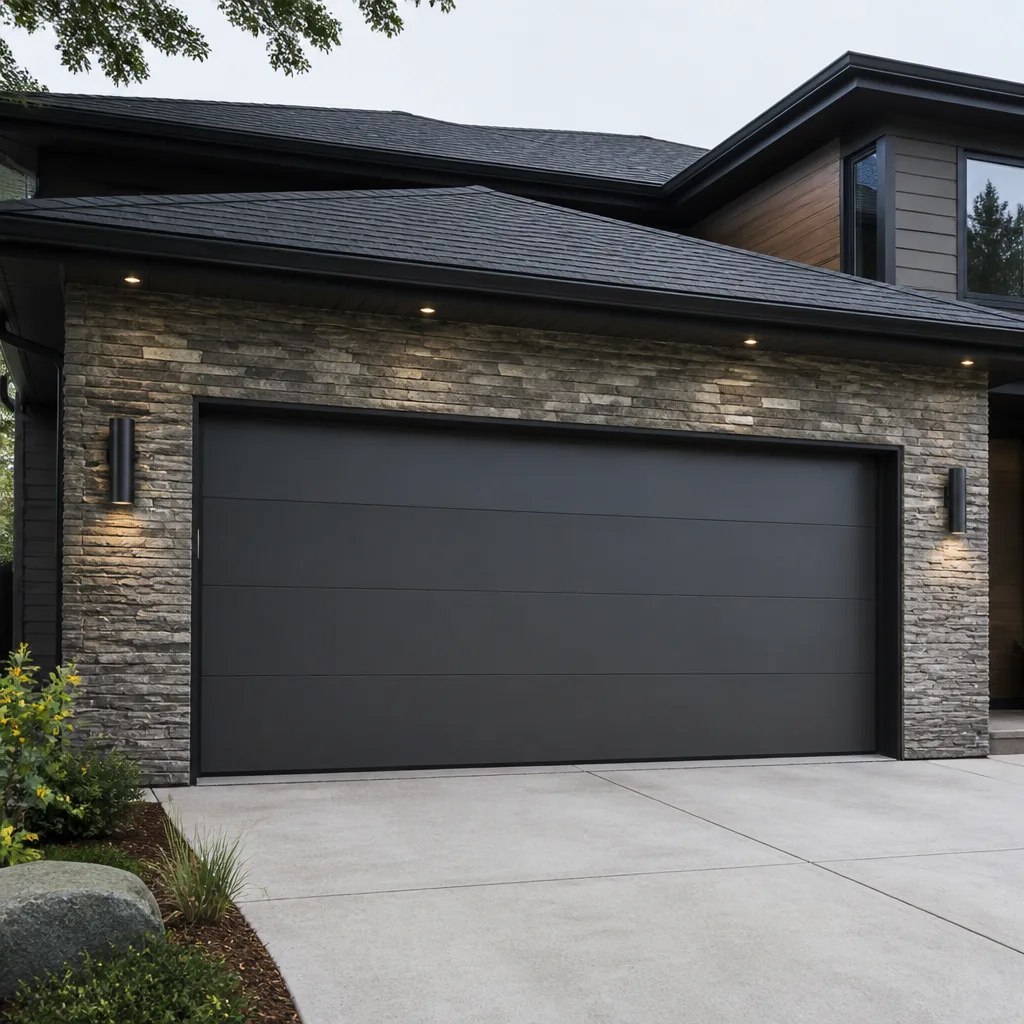 Modern flush
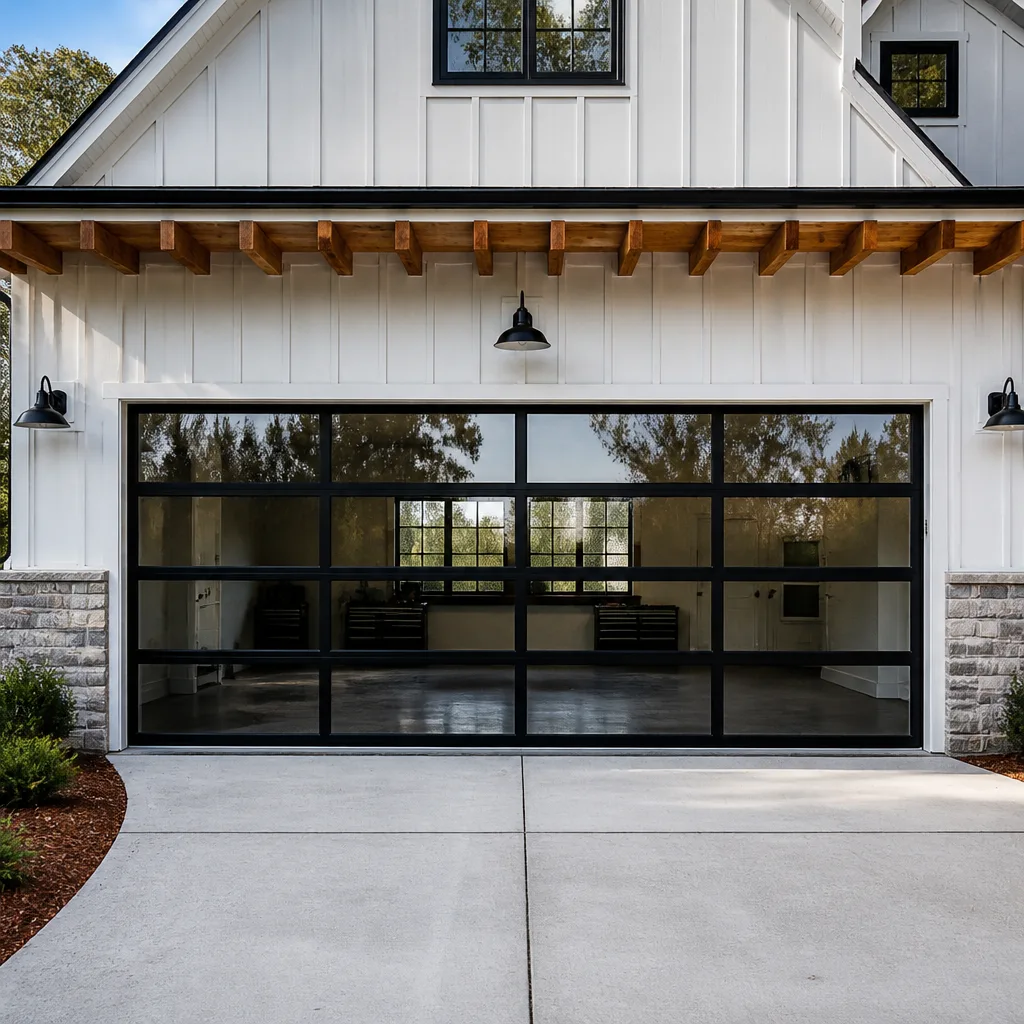 Full-view glass
 LiftMaster openers
 Chamberlain openers
Full 25-point door and opener safety check with every visit - springs, cables, rollers, tracks, and your LiftMaster or Chamberlain opener included
You get a price before we start. It does not change when the pro arrives.
Get your free estimateDIY vs Professional Garage Door: The Hartford Homeowner’s Decision Guide
Torsion springs store enough energy to cause a serious injury in under a second. That’s not a scare tactic, it’s the mechanical reason why spring work sits in a different category than replacing a bottom seal or realigning a safety sensor. The DIY question for garage doors gets argued as if it’s about skill level, and it isn’t. It’s about which specific tasks carry a risk profile where one mistake costs more than any service call ever would. The line between “grab a ladder” and “call someone” can be drawn precisely, and this guide draws it for Hartford homeowners. What follows is a task-by-task breakdown, plain-English physics, realistic cost comparisons for the jobs you can safely handle, the Connecticut liability angle, and how to prepare for a service call so the labor time stays short.
Quick Answer
Do it yourself for bottom seals, lubrication, sensor alignment, remote programming, and visual inspections. Call a professional for torsion springs, extension springs, cables, drums, and track realignment, because those involve stored energy or door weight that can injure you permanently when a component fails without warning. Repairs to these parts are quoted and agreed before any work starts, and estimates are free. In Hartford, spring repair is a technician job without exception.
Styles & brands we work with
- Raised-panel steel
- Carriage house
- Modern flush
- Full-view glass
- LiftMaster openers
- Chamberlain openers
Table of Contents
- Where the Line Actually Sits: Task-by-Task
- The Physics of Torsion Spring Tension, Explained Plainly
- The Cost-Benefit Math for DIY-Eligible Tasks
- Connecticut Liability: What a DIY Spring Job Can Cost You
- How to Prepare for a Professional Service Call
- Why Hartford Weather Shortens Some Parts’ Lives
- What Old Hartford Housing Stock Does to Garage Doors
- Brand Matters When You’re Buying Parts or Booking Service
Where the Line Actually Sits: Task-by-Task
Start with a simple sorting rule: if the task can be done with the door fully closed, no tension under your hands, and your feet on the floor, it’s usually homeowner territory. If it requires you to work on a part that is holding a door up or holding a spring wound, it goes to a technician. That’s the whole test. Most garage door parts fall cleanly to one side or the other.
Here’s where the common tasks land.
Safe for a competent homeowner
- Bottom seal replacement. The rubber or vinyl strip across the floor. It slides out of an aluminum retainer, and the door stays down while you work.
- Lubrication. Hinges, rollers, and the track itself, done with a garage-door-rated lubricant rather than household oil.
- Photo-eye sensor alignment. Small brackets, a line of sight between two lenses, done while the door is fully open and the opener is unplugged.
- Remote and keypad programming. Hold buttons on the opener head in sequence and pair the remote.
- Weatherstripping between panels where the door design allows replacement strips.
- Visual inspection and tightening of bolts that are clearly loose and reachable.
Technician territory, every time
- Torsion springs. The horizontal spring above the door, wound in a way that stores enormous energy. No exceptions.
- Extension springs. Springs that run along the overhead tracks, plus the safety cables that should run through them.
- Lift cables. The cables that run from the bottom corner brackets up to the drums.
- Cable drums and shafts. Anything that requires relieving cable tension.
- Track realignment. Tracks bend from impact, and straightening them safely means controlling the door’s weight.
- Panel replacement on a sagging or bent door. The panel swap itself is simple only when the structure beneath it is sound.
- Opener gear and logic board replacement. Cheap parts, but diagnosis is where the money is saved.
A specialist sees the difference immediately because every visit is a garage door visit. That’s why our garage door repair process starts with diagnosing which of the two categories your symptom actually belongs to.
The Physics of Torsion Spring Tension, Explained Plainly
A torsion spring is a steel coil wound around a shaft. When it’s installed and tensioned, it’s literally twisted hundreds of degrees from its relaxed position and pinned there by the set screws on the winding cone. It’s a compressed energy storage device, not a passive piece of hardware. A single residential torsion spring above a Hartford door is holding somewhere in the neighborhood of the door’s own weight in stored rotational force, and the door itself is a moving panel that can weigh hundreds of pounds.
The reason spring work isn’t a household task comes down to two things: how much energy is stored, and what happens when it releases uncontrolled.
Winding a spring to the correct tension on a door you intend to live with takes two steel winding rods inserted into the cone, a deliberate sequence of quarter-turn increments, a count kept in your head, counter-holds on the shaft, and a way to verify the door’s balance when you’re done. A single slip while winding spins the rods loose at speed. Even when a spring simply breaks on its own, as they eventually do, the failure is sudden and loud, and the door drops. That’s why garage door spring repair is a named, discrete service for us. Springs aren’t a DIY repair, and we won’t pretend otherwise.
This same reasoning is why the safety caveat on a spring job isn’t professional caution. It’s the mechanical definition of the task. If you’re standing on a ladder with a wrench on a winding cone, you’re already in the wrong place.
The Cost-Benefit Math for DIY-Eligible Tasks
The honest version of the DIY-vs-professional math favors DIY on most of the safe list, once you account for your time realistically. The parts are cheap, the tools are common, and the risk is low. Where DIY loses is on any task that requires diagnosis, because the time spent guessing tends to exceed the cost of a service call.
Bottom seal replacement
- Parts: a replacement seal sized to your door width, plus end caps, is an inexpensive hardware-store item.
- Tools: a utility knife, a screwdriver, and a ladder you already own.
- Time: about an hour for a single-car door, closer to two for a double door with a full-width aluminum retainer.
- Compared to: a technician call where the seal and labor are quoted together. Worth DIY if you’re comfortable on a ladder; worth calling if the retainer itself is damaged or the floor is uneven enough that the seal won’t sit flush.
Lubrication
- Parts: one can of garage-door lubricant.
- Tools: the can, a rag.
- Time: 15 to 20 minutes.
- Compared to: there’s no reason to pay for this alone. It’s the best return on time of any garage door task, and it’s also the one most homeowners skip.
Sensor alignment
- Parts: usually none, unless a bracket is bent.
- Tools: a screwdriver and a level.
- Time: 10 minutes, if the sensor LED is amber or off and the problem is simply aim.
- Compared to: a diagnostic call. If you’ve realigned the eyes and the door still reverses, the problem is elsewhere in the system, which points to garage door opener repair rather than a sensor fix.
Remote programming
- Parts: a compatible remote for the opener already on the ceiling.
- Tools: none.
- Time: 10 minutes with the opener’s manual.
- Compared to: don’t pay anyone for this. It’s genuinely a menu-and-buttons job.
Where the math flips: anything requiring a specialist part, because parts for a Clopay or Amarr door aren’t always on a shelf, and anything requiring a second person, because a door does not cooperate with a solo homeowner holding it in place.
Connecticut Liability: What a DIY Spring Job Can Cost You
Homeowner’s insurance is designed to cover accidents, not work the policy is likely to exclude once an adjuster reads the file. If a garage door swings down while you’re under it, the medical side usually goes through your health insurance, and the property side may be complicated by the fact that the damage resulted from work on a component with a known hazard profile. If someone else is injured by a part you wound, the question of fault runs straight back to who did the work.
We’re not going to quote you a claim number or tell you exactly how a carrier will rule. That’s a conversation for your agent, and it’s worth having before a spring job, not after. What we can say plainly is that a spring job done wrong creates exactly the kind of file an adjuster asks hard questions about, while a spring job done by a trained technician creates a service record. That difference matters when something else goes wrong three years later and there’s a paper trail showing the system was maintained.
Homeowners sometimes reason that the savings from a DIY spring job outweigh the risk. Run the numbers honestly: the cost of a professional spring repair versus the cost of an emergency room visit, a dropped door panel, or a ceiling-opener unit pulled off its anchors. The asymmetry is stark. There’s also the resale angle. Hartford has a lot of older homes where a garage door is the largest moving object on the property, and a buyer’s inspector will look at the springs. Unpermitted spring work shows up, and it raises questions at exactly the wrong moment.
One more Connecticut note: garage doors and openers commonly require a permit when the installation involves new electrical work or structural changes to the opening. Spring replacement generally doesn’t, but if you’re replacing a door or having a new opener wired in, ask Hartford’s building department what applies to your address. Better to ask first than to find out during a sale.
How to Prepare for a Professional Service Call
A prepared homeowner saves money on any service call, and garage doors are no exception. Labor time is what drives the bill, and every minute the technician spends finding the problem or moving around a cluttered garage is a minute you’re paying for.
- Write down the symptom precisely. “It reverses halfway up” or “it goes up but won’t come down” tells a technician far more than “it’s broken.” Note whether it happens cold, whether it happens with the remote or the wall button, and whether the opener light blinks in a pattern.
- Test both controls before the visit. Try the remote, the wall button, and the keypad. The answer to “does any of them work” narrows the diagnosis to the opener head or the control wiring.
- Clear the floor and the approach. Six feet of clear floor in front of the door and a path to the opener head make the job faster.
- Unplug the opener if the door is stuck open. If the door is closed and secure, leave it closed. If it’s stuck halfway, don’t force it. The technician needs to see it in the state it failed.
- Gather the model numbers. Look for a sticker on the opener head and a label on the door’s edge. Knowing you have a Craftsman opener under a Wayne Dalton door means parts can be checked before the technician arrives.
- Have the written estimate confirmed by phone or online before the truck rolls. The price is quoted and agreed before any work starts, and a call ahead is how you keep it that way.
- Note anything else that’s been off. A door that’s been noisier for weeks, a slow open, a bouncing stop at the floor. Fixing those during the same visit costs less than a second trip.
For a full replacement rather than a repair, preparation looks different. Have your door’s width, height, and the headroom above the door measured before the call, and expect a measure-and-quote visit rather than a same-day job. That work is scheduled because the door is ordered to your opening. Our garage door installation estimates are free and in writing.
Why Hartford Weather Shortens Some Parts’ Lives
Hartford’s season is a full four-season cycle, and a garage door lives through every one of them. Winter brings repeated freeze-thaw cycles at the base of the door, where the bottom seal contacts a concrete floor. That contact is where the seal’s rubber cracks and goes hard. Summer brings heat and humidity, and if a garage is unventilated, the interior can run much hotter than the outdoor air, which stresses opener electronics and dries out rollers and hinges that haven’t been lubricated.
The practical result is a maintenance rhythm specific to this region. Lubrication twice a year, in late fall before the freeze and in spring after it, is a reasonable baseline. Bottom seals here don’t last as long as they do in places with a milder winter, so an annual look at the edges is worth the ten minutes. Springs themselves don’t care about weather, but they do work harder in a cold season when the door and the tracks stiffen, and a spring holding a door through a cold snap is doing real work.
For a Hartford homeowner, this means one thing: the summer is the best time to get a service call ahead of winter rather than after the first freeze, when a stiff door makes every symptom worse and the phone rings more often at every garage door specialist in the area.
What Old Hartford Housing Stock Does to Garage Doors
A lot of Hartford’s housing is older than the garage doors on it. In neighborhoods like West End, Asylum Hill, and Frog Hollow, you’ll find detached and semi-detached garages built for cars that were narrower and shorter than anything on the road now, and the door that’s on that garage today may be the second or third fitted to the same opening. That matters for a homeowner weighing DIY because the structure underneath may not be forgiving.
Specifically, the common patterns in older Hartford garages:
- Out-of-square openings. A garage built decades ago has settled. A door that runs on tracks bolted to out-of-square framing tends to drift or bind on one side, and the fix isn’t the door, it’s the track. That’s technician territory.
- Undersized or non-standard header framing. When a new opener gets installed on a header that wasn’t built for it, the anchors can work loose over time, and the opener sags. Diagnosing that requires knowing what a proper header looks like.
- Low headroom. Many Hartford garages have less headroom above the door than a standard torsion setup expects, which pushes some homes toward extension springs or low-clearance components. Those are exactly the parts where the wrong parts create the wrong hazard.
- Mixed vintage parts. A door from one era on an opener from another, with tracks from a third. That combination makes diagnosis slower for a generalist and faster for someone who works on doors all day.
The old-housing pattern also explains why so many Hartford calls are about a door that’s “never worked right” rather than a door that “just broke.” When the whole system is old, the fix is usually to address the weakest component first, and a specialist is the one who can tell you which component that is without guessing.
Brand Matters When You’re Buying Parts or Booking Service
Where DIY garage door work goes wrong most often isn’t technique, it’s parts. Every door and opener has brand-specific dimensions and components, and a torsion spring that fits a door made by one manufacturer may be a different wire gauge, length, and wind than one made by another. Buying a universal spring online is how a door ends up unbalanced, whining, or failing again in a year.
We work on the brand you already have. Our technicians are trained across eight of the most widely installed lines: LiftMaster, Chamberlain, Genie, Clopay, Amarr, Wayne Dalton, Craftsman, and Raynor. In practice that covers most of what’s hanging in Hartford garages. A homeowner who has an Amarr door and a Craftsman opener under it can call us for either part of the system, and the diagnosis covers both the mechanical door and the electronics behind it in a single visit.
For a DIY-eligible task, brand matters less – a bottom seal cut to width works on any door. For anything on the technician list, brand is the difference between a part that arrives correct and a second trip. If you’re unsure what you have, look for a label on the door’s stile and a model sticker inside the opener’s light cover, and tell us what you find. Knowing the model gets the parts planned before the visit, which is how you keep the labor time short.
Common Mistakes to Avoid
- Winding a torsion spring by yourself to save a service call. The spring is holding the door’s weight, and the winding cone is under full tension every time you turn it. A mistake here is measured in broken bones, not a bigger invoice.
- Cutting a spring’s safety cable on an extension-spring door and skipping the replacement. Safety cables are there for the day the spring snaps. Skip the cable and the spring becomes a projectile. On any Hartford door with extension springs, check for the cable and call if it’s missing.
- Fitting a universal replacement spring without matching the door’s weight and track radius. Springs are sized to a specific door. A mismatched spring makes the opener work too hard and wears out the gear inside it.
- Using a lubricant not meant for garage doors. Household oil and grease collect grit and gum up rollers. A garage-door-rated spray is inexpensive and doesn’t attack the plastic bushings.
- Adjusting the opener’s force limit to make a stiff door close. Turning up the force to overcome friction hides the real problem, which is usually a bound track or a failing spring, and it defeats the safety reverse. This is one of the phone calls we get most in Hartford, and the answer is usually “put the limit back and let us look at the door.”
- Ignoring a visible gap at the bottom of the door through the winter. In an unheated Hartford garage, a gap lets cold air and rodents in. The seal is the cheapest thing on the door to replace and the easiest to postpone.
- Booking a same-day repair visit before taking a model number off the opener. A photo of the sticker and the door’s edge label helps the specialist arrive with the right parts, and it shortens the job.
See the difference
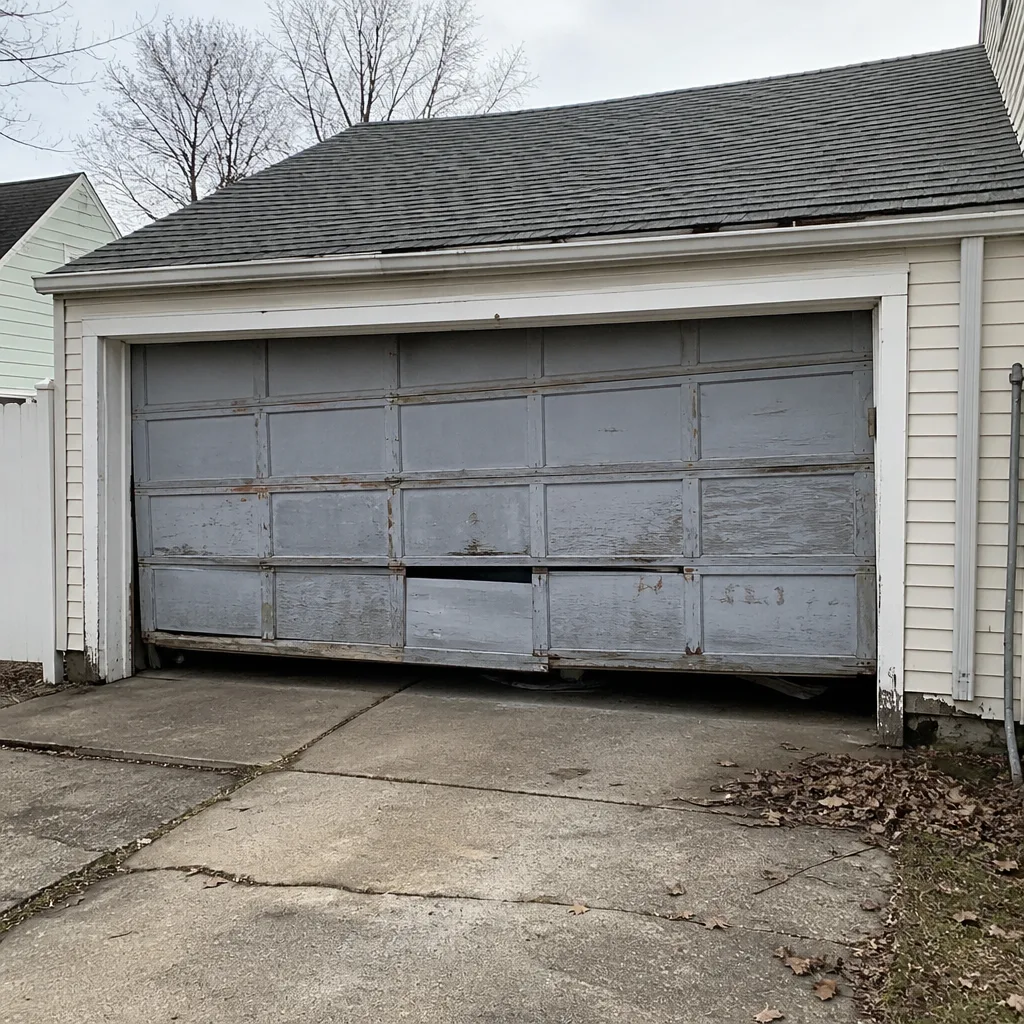 Before
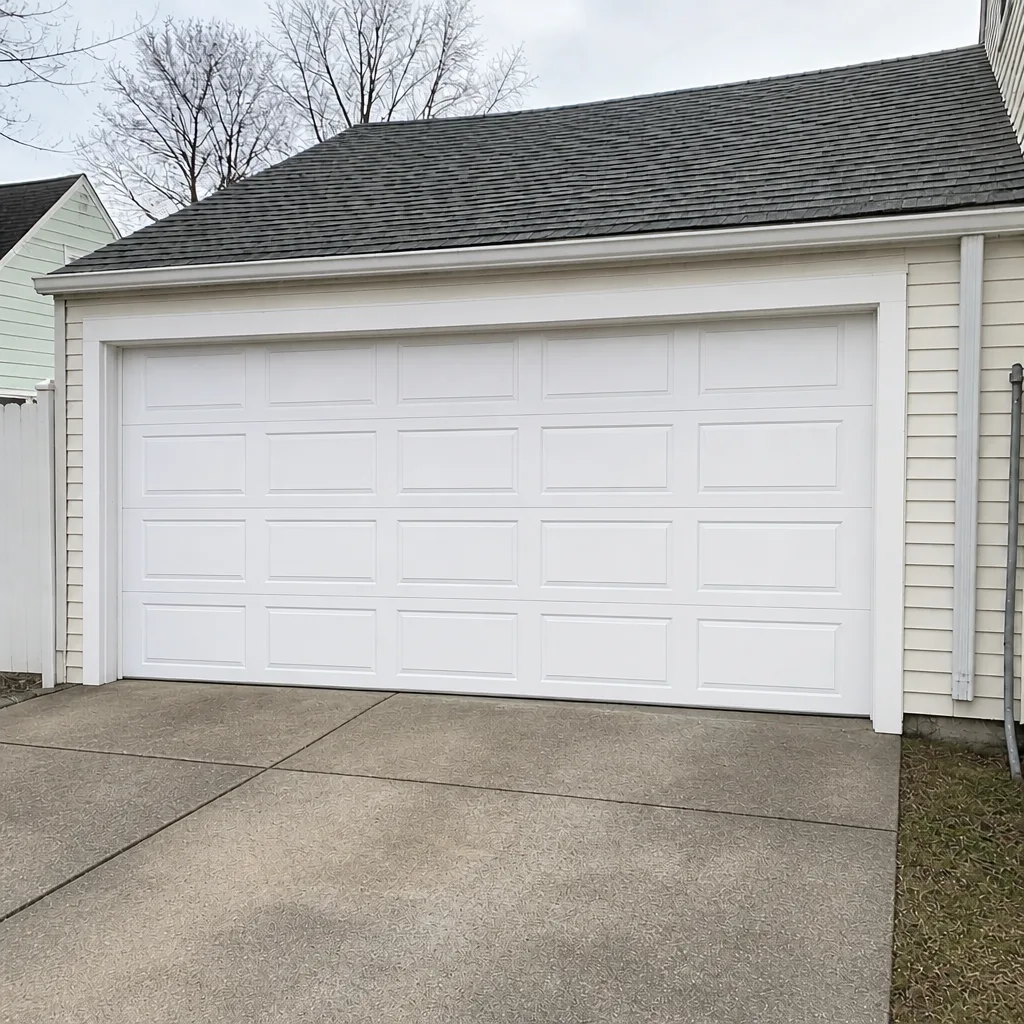 After
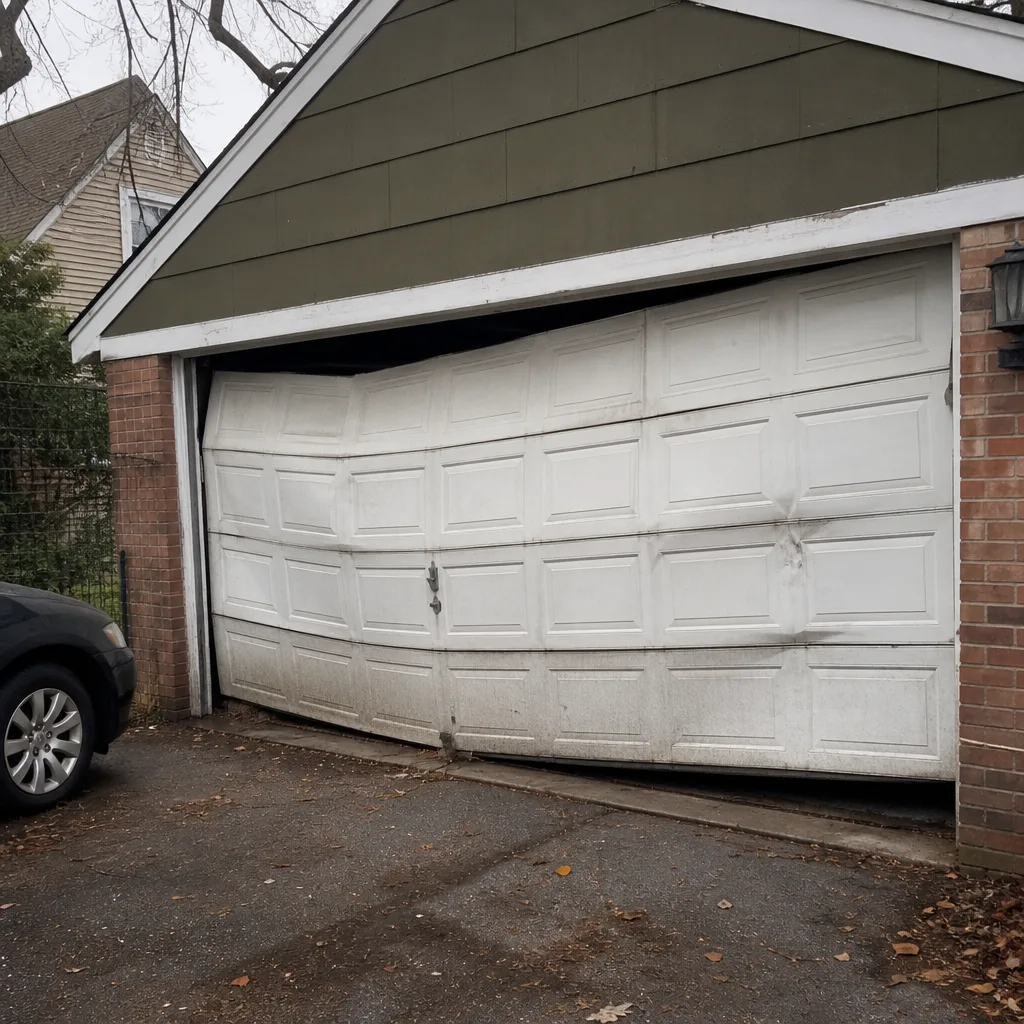 Before
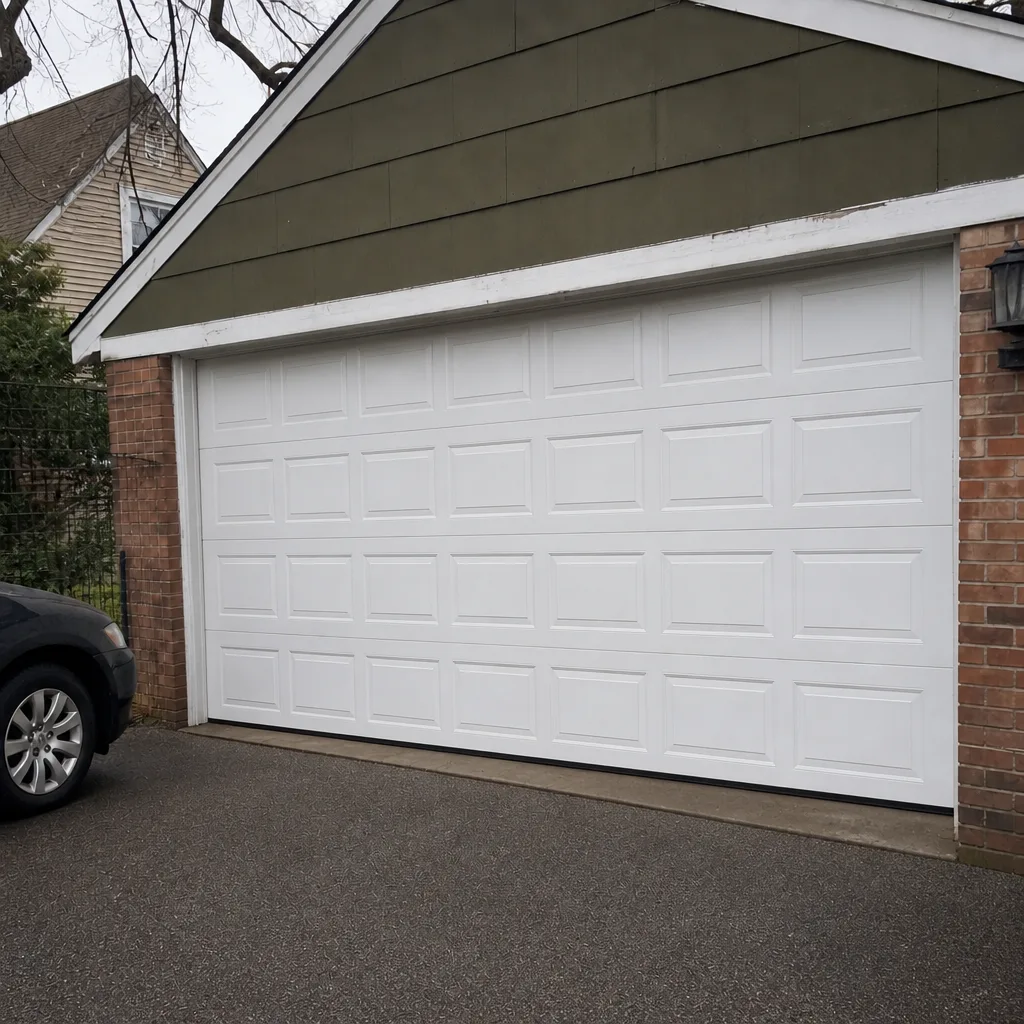 After
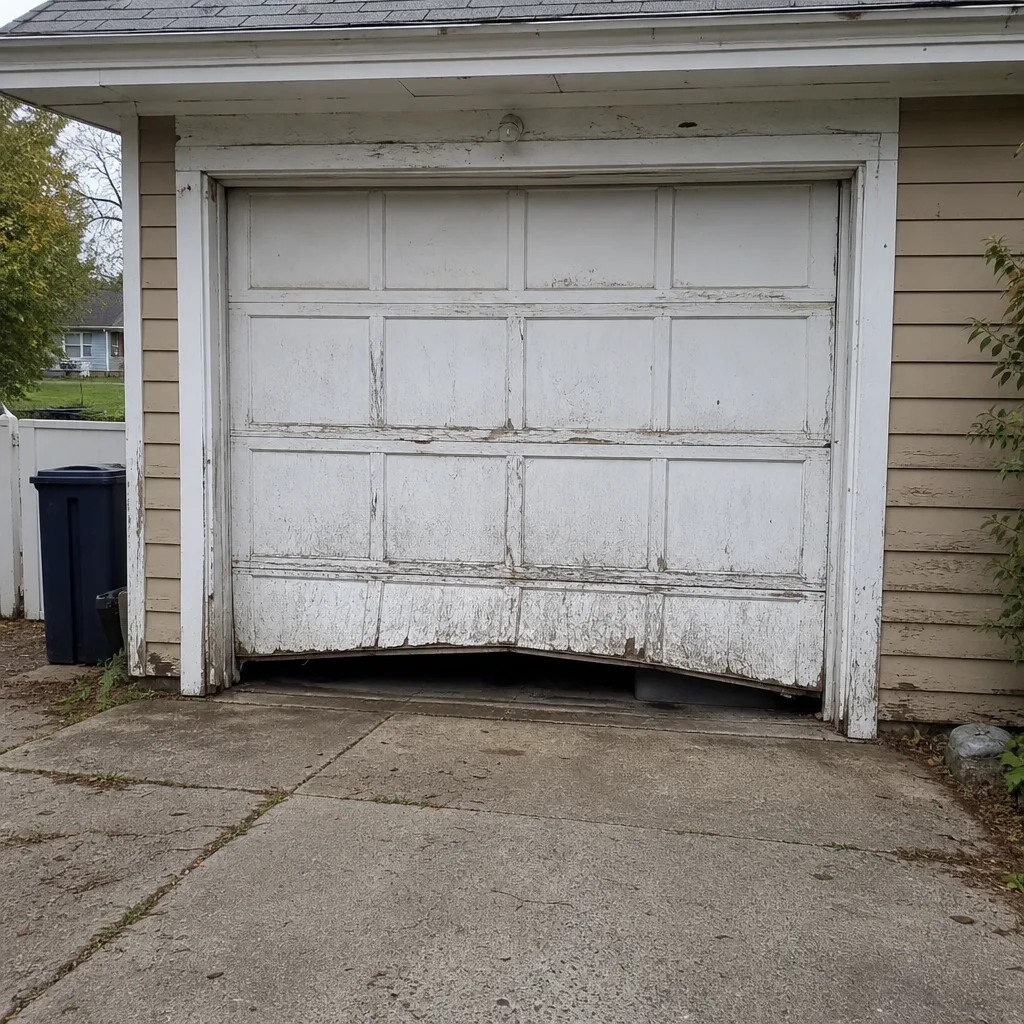 Before
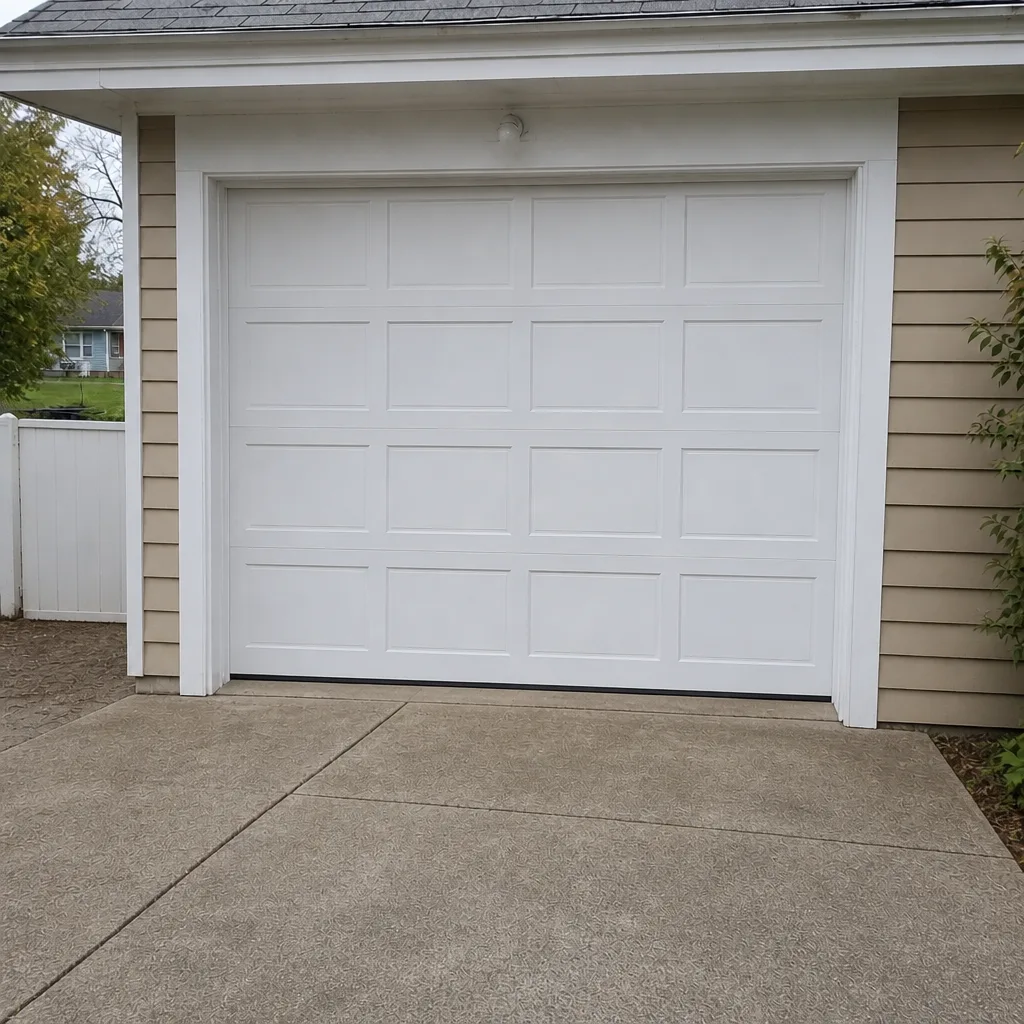 After
When to Call a Professional
Call a professional if a spring is broken, a cable is frayed or hanging, the door is crooked in its tracks, a panel is bent, the opener hums without moving the door, or the door reverses on its own without an obvious sensor obstruction. Also call if you can safely see a part wobbling that shouldn’t be, or if the door makes a loud bang and then sits closed. These are all symptoms where the risk of a DIY attempt is a dropped door or a shock. A Hartford specialist can diagnose and quote the fix in one visit. Hartford Garage Door Repair Co offers free estimates in Hartford, and our technicians have up to 10 years of experience. Call (833) 482-6140. We answer 24/7. Fast dispatch from 7am to 7pm, Sunday through Friday.
Frequently Asked Questions
No. A torsion spring stores enough energy during winding to injure you seriously if it releases, and there’s no safe way for a homeowner without winding rods and training to tension one. Call (833) 482-6140 for a free estimate instead.
Bottom seal replacement, lubrication, sensor alignment, remote programming, and visual inspection are all reasonable homeowner jobs because the door stays closed and no stored tension is under your hands. Springs, cables, drums, and track realignment are technician jobs. Call (833) 482-6140 if you’re not sure which side a symptom falls on.
Spring replacement is quoted per door, and the pair should be replaced together, so expect roughly twice the single-spring price. Your written estimate sets the final price before any work starts, and estimates are free. Call (833) 482-6140 for an exact quote on your door.
Damage or injury caused by your own work on a component with a known hazard is the kind of claim an adjuster will scrutinize, so talk to your agent before attempting anything risky. We can’t speak for a carrier’s decision, but a trained technician’s service record is what an insurer expects to see. Call (833) 482-6140 for a free written estimate.
A reversing door in winter is usually a photo-eye sensor that’s blocked by salt-stained slush, frost, or a spider’s web, or a stiff roller binding in a cold track. Clear the sensor lenses first, then check for a bound roller, and call if the door still reverses. Call (833) 482-6140 for a same-day repair visit.
Routine repair and spring replacement generally don’t require a permit, while a new door installation or new electrical work at the opener commonly does. Ask Hartford’s building department what applies to your address before you book the work. Call (833) 482-6140 with your model numbers and we’ll help you prepare.
Clear the floor in front of the door, write down the exact symptom, test the remote and wall button, and grab the model number off the opener and the door’s edge label. That preparation shortens the job and keeps the labor time down. Call (833) 482-6140 to book the visit.
The Bottom Line
The DIY-vs-professional line for garage doors isn’t about whether you’re handy. It’s about which parts release stored energy when they fail, and everything on the spring-and-cable side of that line belongs to a technician. You can handle the seal, the lubrication, the sensor, and the remote with confidence, and doing so saves real money. You should not touch the springs, and no guide, video, or neighbor’s advice should talk you out of that. In Hartford, where the housing is old and the winters are hard on seals and rollers, the smart routine is DIY maintenance plus a professional for every symptom that involves a bang, a sag, or a spring. When the door won’t move, we do. Our technicians have up to 10 years of experience, and we work with the brands you already own – Clopay, Amarr, Wayne Dalton, Craftsman, and the rest of the eight lines we service. Hartford Garage Door Repair Co covers emergency service for urgent failures and everything from there through full installation.
When you’re ready, call (833) 482-6140 for a free estimate. We answer 24/7. Fast dispatch from 7am to 7pm, Sunday through Friday.
Written by the team at Hartford Garage Door Repair Co.